For decades, airports have largely planned their fueling facilities around two familiar products: 100-octane low-lead aviation gasoline (100LL) for piston-engine aircraft and Jet A for turbine-powered aircraft. That landscape is beginning to change.
The aviation industry is working toward alternatives that address two different environmental concerns: lead emissions from piston-engine aircraft and greenhouse gas emissions associated with turbine-powered aircraft. For airports, however, the more immediate question is practical: What could these changes mean for our facilities, our users, and the investments we make today? There is no single answer for every airport. A general aviation airport supporting recreational flying and flight training may face very different needs than an airport with significant corporate or turbine-powered activity. Understanding those differences is an important first step toward making informed, appropriately timed infrastructure decisions.
Two Fuel Transitions, Different Considerations
For piston-engine aircraft, much of the industry’s attention is on replacing 100LL with unleaded aviation gasoline. Although automotive gasoline has been unleaded for decades, many piston-engine aircraft continue to rely on 100LL because of their performance and octane requirements. The Federal Aviation Administration (FAA), working with aviation industry partners through the Eliminate Aviation Gasoline Lead Emissions (EAGLE) initiative, is pursuing a transition to unleaded fuel for piston-engine aircraft by the end of 2030. Several unleaded alternatives are being developed or introduced, but aircraft compatibility and fuel availability continue to be important factors. That creates a planning consideration for airports: the transition may not happen all at once. Some airports may need to accommodate 100LL and an unleaded alternative during a transition period. Depending on an airport’s existing facilities, that could affect storage and dispensing needs.
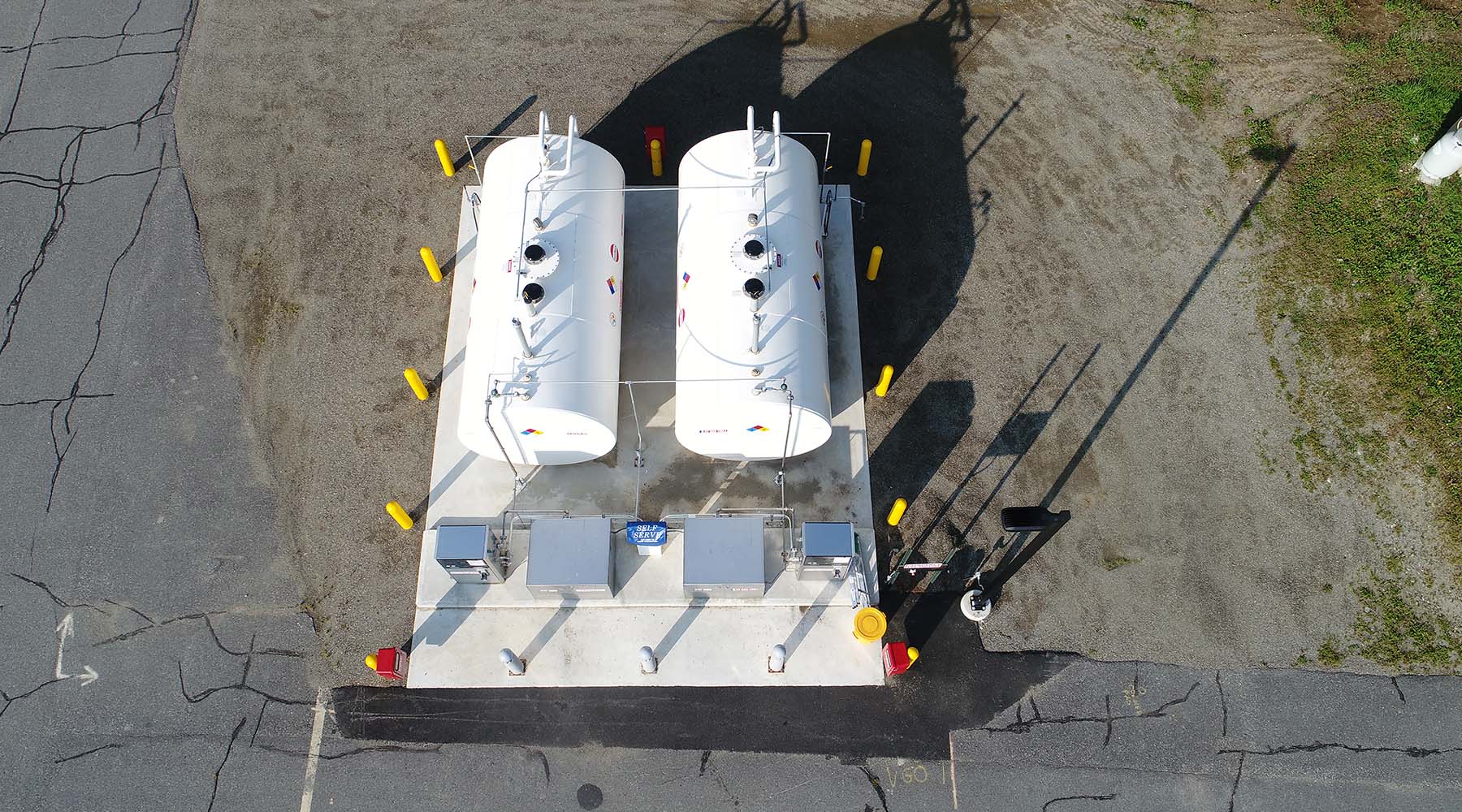
Our team completed a project in Carrabassett Valley at the Sugarloaf Regional Airport where we installed 2 new above ground fuel tanks for them. These were 6000-gallon tanks that allowed the airport to sell fuel to based and itinerant aircraft in order to provide a needed aeronautical service and to assist the airport in becoming as self-sustaining as possible. For turbine-powered aircraft, the conversation is different. Sustainable Aviation Fuel (SAF) is intended to reduce lifecycle greenhouse gas emissions compared with conventional petroleum-based jet fuel. Approved SAF production pathways can allow blending with conventional jet fuel, with allowable blends depending on the pathway and applicable fuel specifications.

For an airport manager, the takeaway is not necessarily that SAF requires an immediate capital project. Cost, regional availability, operator demand, suppliers, and the airport’s existing operations all influence whether and when SAF becomes relevant.
Start With Your Airport, Not the Fuel
With several technologies and fuel options evolving at once, it can be tempting to begin by asking which alternative fuel an airport should offer. A better starting point is the airport itself. What aircraft use the airport today? What does existing fuel demand look like? Are operations expected to change? What is the age and condition of the existing fuel system? Are improvements or replacement already anticipated? Those answers provide the context airport managers need before making an infrastructure investment. For example, an airport primarily supporting recreational flying and flight training may need to pay particular attention to developments in unleaded aviation gasoline. An airport with significant corporate or charter activity may also want to monitor SAF availability and demand. The appropriate response could be different for each airport.
This is where long-term planning becomes particularly valuable.
Build Flexibility Into Planned Improvements
Airports do not necessarily need to make immediate infrastructure changes because alternative fuels are evolving. But when a fuel farm replacement, terminal-area improvement, apron project, or other development is already being considered, it is worth asking how today’s decisions could affect tomorrow’s options. Airport Master Plans, Airport Layout Plans, and Capital Improvement Programs can provide opportunities to consider future fueling needs alongside other development priorities. Depending on the airport and project, considerations may include available space, storage capacity, utilities, vehicle access, fuel system configuration, and potential future expansion. That does not mean constructing infrastructure before it is needed. It means avoiding decisions today that unnecessarily limit an airport’s choices later. That approach fits how Hoyle Tanner works with airport clients: understanding the airport’s particular circumstances and identifying practical solutions rather than applying the same answer everywhere. The firm’s brand guidance specifically emphasizes regional knowledge, responsiveness, quality and personal service, while rejecting a one-size-fits-all approach.
Bring the Right People Into the Conversation
Fuel planning does not happen in isolation. Airport managers can benefit from conversations with Fixed-Base Operators, fuel suppliers, aircraft owners, airport users, the FAA, and state aviation agencies. Those discussions can help clarify demand, availability, pricing, operational considerations, regulatory requirements, and potential funding opportunities before an airport commits to an infrastructure investment.
For smaller airports in particular, this can help separate an emerging industry trend from a near-term local need. With the Sugarloaf fuel farm installation Hoyle Tanner coordinated extensively with subcontractors, MaineDOT, MaineDEP, FAA and the airport to complete the design and construction including completing the necessary Maine Fire Marshall permitting and MaineDEP aquifer determination.
Plan for Change Without Overbuilding for It
The aviation fuel transition will not look the same at every airport. Aircraft compatibility, fuel availability, infrastructure, cost, and user demand will influence how quickly different alternatives become relevant.
For some airports, preparing for unleaded aviation gasoline may become the more immediate consideration. For others, SAF may warrant closer attention. And for many, the right decision today may simply be to understand what is changing and make sure planned investments preserve reasonable options for the future. That is where thoughtful airport planning matters most. Hoyle Tanner’s aviation team works with airports to understand existing operations, evaluate infrastructure needs, and plan improvements around the airport’s specific priorities rather than a one-size-fits-all solution. That practical, client-specific approach aligns closely with the firm’s stated emphasis on quality, personal service, regional expertise, and client empowerment. Planning a fuel farm project or wondering how alternative fuels could affect your airport? Contact Hoyle Tanner’s aviation team to start the conversation and build a fueling strategy that fits your airport’s needs today and in the years ahead.