Whether we’re walking the dog, heading to work, taking our children to the bus stop, or enjoying New England’s fall foliage, most of us are pedestrians at some point in our day. But how often do we stop to think about the safety of those everyday journeys? With October coming to an end – along with National Pedestrian Safety Month – it is a good time to reflect on the importance of safety for all road users.
Here are some sobering 2024 pedestrian crash statistics that show why this is an important issue:
- 7,080 pedestrians were killed and 71,635 pedestrians were injured in traffic crashes.
- 18% of all traffic deaths were pedestrians.
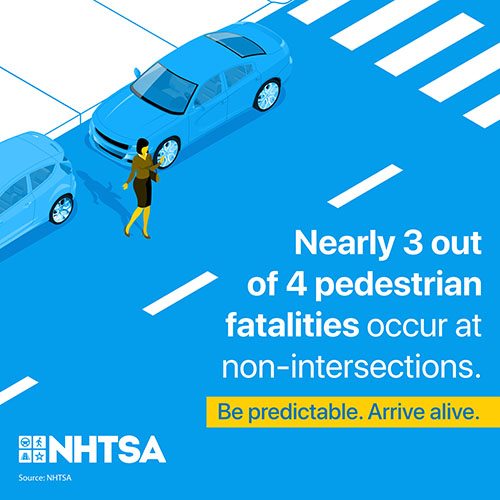
- 73% of the pedestrian fatalities occurred at locations that were not intersections.
These numbers are more than just statistics. They represent people who were making ordinary, everyday trips. As traffic engineers at Hoyle Tanner, we strive to improve pedestrian safety by incorporating pedestrian safety into all our roadway and bridge projects.
Connecting South Burlington, One Crossing at a Time
In 2023, we evaluated potential active user crossings at four locations in South Burlington, Vermont as part of a scoping study. South Burlington has a well-established network of shared-use paths that connect neighborhoods with schools, businesses, retail centers, and recreation areas.
South Burlington continues to improve this network and active user safety by connecting gaps in existing pedestrian infrastructure and improving crossings.
The Challenge at Dorset Street & Songbird Road
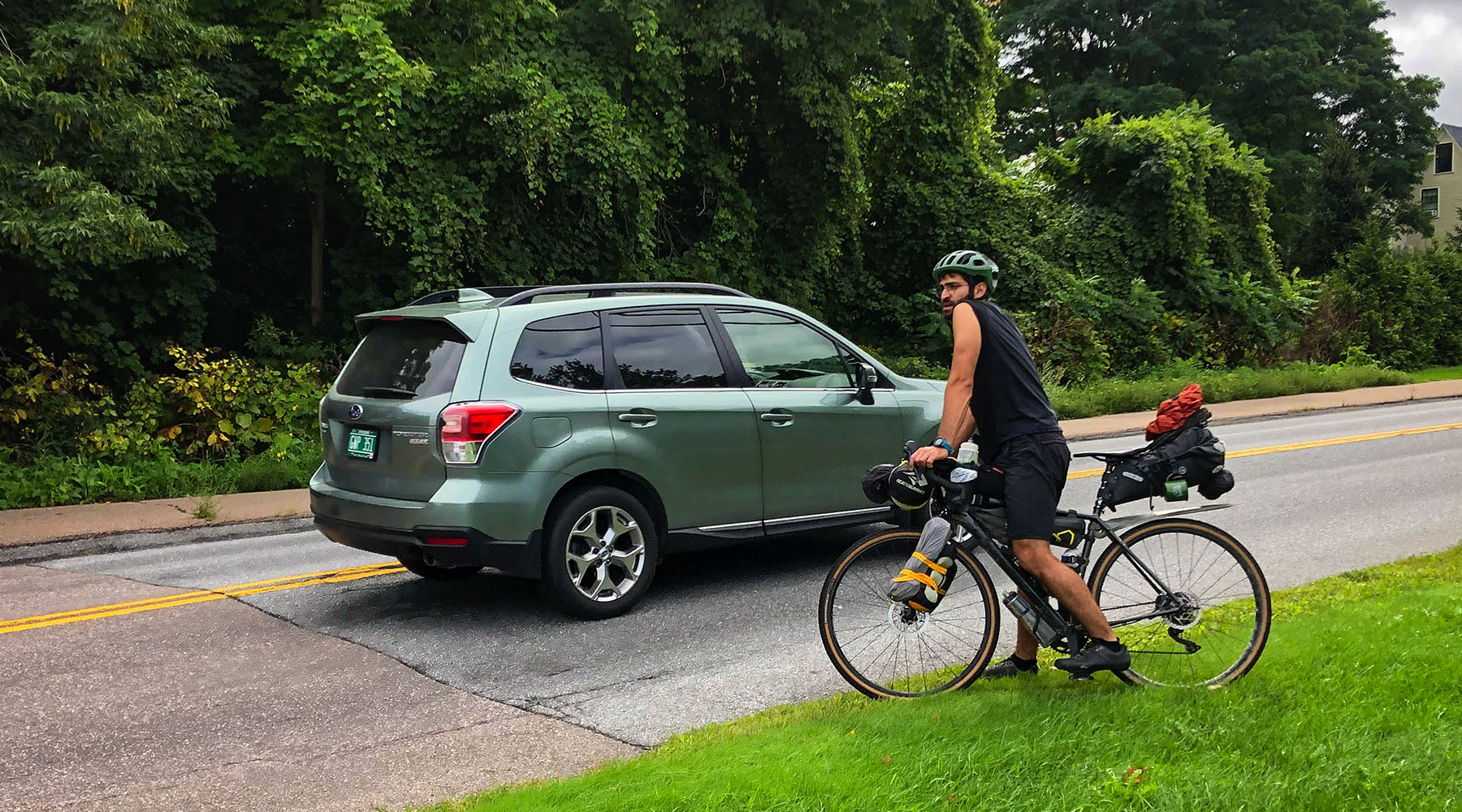
One of the four sites we studied was at the intersection of Dorset Street with Songbird Road. This intersection is a popular crossing location for pedestrians and cyclists, including students attending South Burlington High School and the Federick H Tuttle Middle School, and connects the shared-use path on Songbird Road with one that runs along the east side of Dorset Street. With nearly 10,000 vehicles per day on Dorset Street, it can be difficult for active users to find a safe gap in traffic. The popular crossing point is not conspicuous to southbound drivers who approach the intersection from an underpass.

Our scoping study proposed two alternatives.
- Alternative 1 recommended a crosswalk with rectangular rapid flashing beacon (RRFB), aligning with the existing shared-use path on Songbird Road.
- Alternative 2 included the RRFB and also proposed a curb extensions to improve conspicuity of the crosswalk, visually narrow the road to encourage traffic calming, and prevent northbound vehicles from driving up on the Dorset Street shared-use path to pass vehicles waiting to turn left into Songbird Road.
More than Just Adding a Crosswalk

Although it seems intuitive that proposing a crosswalk across a road will improve safety for those crossing the roadway, a crosswalk that is not conspicuous to drivers may cause safety concerns. At Songbird Road, visibility to the south was excellent, with a flat northbound roadway, no curves and open Right-of-Way. But looking north at the southbound lane was a different story. The southbound lane passes below an underpass and heads uphill toward the crosswalk. Although site lines are clear and meet minimum stopping sight distances, due to the nature of the roadway, advanced warning signage became a priority for this location and main priority when developing the preliminary design. Channeling active users to a single location marked with conspicuous signage is also an improvement over the current ambiguous crossing location.
The preliminary design can be characterized as having:
- Proposed curb, path, lighting and drainage improvements while indicating a crossing location at a crosswalk, aligned with alternative 2 from the scoping report. The curb carries multiple benefits, serving as a vertical barrier between the roadway and path facility users and the RRFB while also routing drainage into a newly proposed catch basin, consolidating the drainage and keeping it from flowing into the adjacent driveway.
- The path in this section was widened slightly to more closely meet the ideal shared use path width while minimizing Right-of-Way impacts to the adjacent parcel.
- Lastly, the RRFB and crosswalk will improve the safety of all users crossing the roadway, indicating to vehicles that someone is entering the roadway. More information regarding the proposed lighting will be covered in the next section.
- The concern for southbound traffic’s visibility of the crosswalk is addressed with a set of two RRFB assemblies as the crosswalk is approached, one with “AHEAD” signage and then the closer RRFB with the classic area noting where people will be.
Why Lighting Matters after Dark

Lighting is always a concern with pedestrian crosswalks. In 2024, 76% of pedestrian fatalities occurred in the dark. A key feature of this design is the lighting introduced for the crosswalk. Per AASHTO guidelines, the minimum brightness, measured 5 feet above the ground in the center of a crosswalk should be 10 lux.
As part of this project, our team went out to the intersection at night to measure the existing lighting levels. Our nighttime assessment found that the existing lighting did not adequately illuminate pedestrians in the crosswalk. Therefore, the preliminary design includes a new, improved streetlight as well as lighting mounted on the RRFB that will illuminate when the RRFB is activated.
Pedestrian Safety is a Shared Responsibility
Improving pedestrian safety is not just an engineering challenge. Pedestrian safety depends on all of us and on cooperation between drivers and pedestrians. Here are some reminders for drivers and active road users to help keep everyone safe:
Drivers
- Obey the speed limit, especially in neighborhoods and near schools (higher speeds increase the severity of injury to pedestrians and other active users)
- Always stop for pedestrians in crosswalks
- Pay attention to the road and not phones or car entertainment systems
- Never pass vehicles stopped at a crosswalk
Pedestrians & Active Users
- Use designated crosswalks whenever possible
- Stay visible by wearing bright colored clothing
- Remain alert and not be distracted by phones
Engineering Safer Connections
Projects like the Dorset Street crosswalk demonstrate how thoughtful engineering can turn community concerns into practical safety improvements. By identifying risks, listening to the people who use our roadways, and designing solutions that address their needs, we can create safer connections for pedestrians and cyclists and help make walking, biking, and riding a scooter more accessible for everyone.