Anyone who flies with any regularity has felt it: long lines, confusing circulation through a terminal, or flights delayed not because of weather, but because of airfield capacity issues.
For airport owners and the municipal leaders who support them, these frustrations are not abstract. They show up as public complaints, operational stress, and pressure to deliver improvements within tight funding limits. Behind the scenes, many of those challenges can be traced back to how airport projects are planned, designed, and phased.
At Hoyle Tanner, we see airport infrastructure not as isolated projects, but as part of a larger customer experience – that directly affects residents, businesses, and visitors. Thoughtful design decisions, made early and with operations in mind, can make air travel feel more intuitive, reliable, and less stressful.
Designing for People, Not Just Facilities
Engineering an airport project is never just about adding square footage or replacing aging infrastructure. The question we consistently ask is: How will this function while the airport continues to operate?
That mindset shifts the focus from simply completing construction to improving how passengers move through a space – especially during periods of disruption. In many cases, the most meaningful gains in customer service come not from what is built, but how it is built and phased.
This approach requires close coordination with airport staff, a clear understanding of peak travel patterns, and design flexibility that accounts for day-to-day operations. It also means recognizing that construction is unavoidable – but confusion, bottlenecks, and unnecessary delays are not.
Example 1: Phasing Terminal Improvements to Keep Security Moving
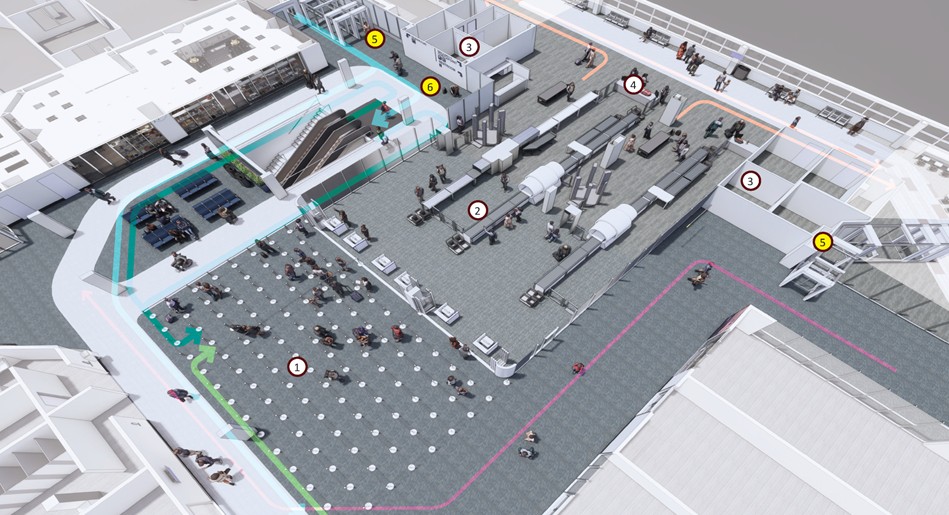
One recent terminal security screening checkpoint improvement highlights how design phasing can reduce stress for both passengers and airport operators.
The project involves expanding security screening capacity while reconfiguring the surrounding space to improve circulation and wayfinding. Rather than treating phasing as a contractor-only concern, phasing was built directly into the design process. Multiple working sessions were held to map passenger flows, test temporary layouts, and plan clear transitions as construction progresses.
The result is a sequence of improvements that will allow screening capacity to increase while keeping security intuitive and accessible throughout construction. Passengers experience clearer paths, fewer decision points, and less uncertainty – even while work is underway.
For the airport, this approach minimizes operational disruption and reduces the risk of customer frustration that can linger long after a project is complete.
Example 2: Improving Reliability Through Smarter Airfield Planning
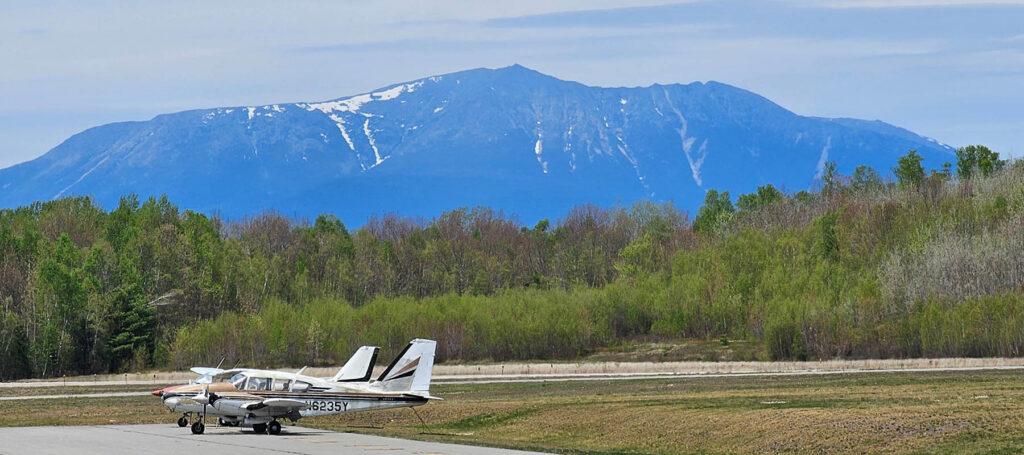
Passenger experience is shaped long before someone enters a terminal. In more remote communities, reliability – the ability to arrive and depart as scheduled – is often the most important service an airport can provide.
An airfield approach study at a northern New England airport focused on improving commercial airline access during challenging weather conditions. By analyzing terrain, aircraft types, and existing approach limitations, the study identified opportunities to improve runway approach capability.
While these changes may be invisible to most travelers, their impact is tangible: fewer canceled flights, more dependable winter operations, and greater confidence that the airport can serve its community year-round.
For municipal leaders, this kind of planning supports public trust. When flights operate as expected, residents and businesses see an airport that works for them – even when conditions are less than ideal.
Practical Takeaways for Municipal & Airport Leaders
Projects that prioritize passenger experience don’t require extravagant budgets, but they do require intention. Based on this work, several considerations consistently lead to better outcomes:
- Plan phasing early. Incorporating operational phasing during design – not after – reduces disruption and surprises.
- Focus on flow and clarity. Clear circulation, intuitive layouts, and obvious wayfinding lessen confusion during both construction and daily operations.
- Value reliability as customer service. Improvements that reduce delays or cancellations often deliver the greatest public benefit, even if they are not immediately visible.
- Keep collaboration central. The best solutions come from aligning engineering decisions with how airport staff actually operate the facility.
Supporting Confidence in a Changing Travel Environment
Air travel continues to evolve, and public expectations continue to rise. Airports, especially those serving smaller or regional communities, are under constant pressure to do more with limited resources – while still delivering safe, dependable, and understandable facilities.
Thoughtful design, grounded in operations and guided by real-world experience, helps airport owners meet those expectations. When projects are planned with people in mind, infrastructure becomes more than a capital investment – it becomes a quiet contributor to public confidence.
If you are planning terminal improvements, airfield studies, or phased construction at a busy airport, these conversations are worth having early. The right questions, asked at the right time, can make travel easier for everyone who depends on your facility.
Dive deeper into the work we’re doing for our clients: