
Right-of-Way involvement should begin at the scoping meeting, where we can discuss the number of affected properties and clearly define what needs to be accomplished. At this stage, the Project Manager and Right-of-Way coordinator should review and discuss the plans not only from an engineering perspective, but also through a Right-of-Way lens. This early coordination helps identify potential challenges, schedule impacts, and risks before they affect project delivery.
One of the first steps in the Right-of-Way process 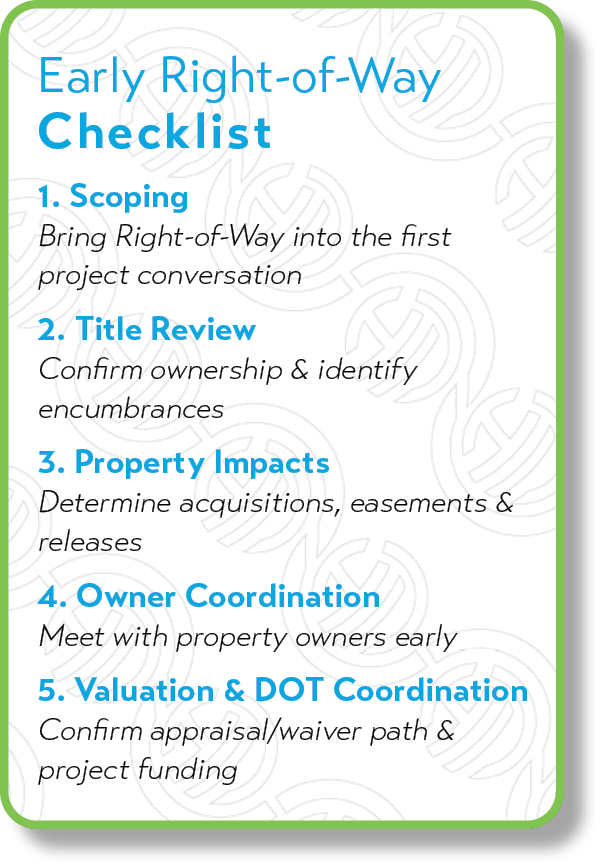 is completing a title search for all affected properties to confirm ownership. Per New England state DOT requirements, title searches must typically cover a minimum of 40 years. This includes reviewing all items associated with the property – mortgages, liens, easements, and other encumbrances. In some cases, the search must go back even further, particularly when deeds contain ambiguous language such as “subject to other rights, easements, and interests.” In these situations, additional research is required to determine whether those rights are still active, whether they may conflict with proposed improvements, and whether a release from another party is necessary.
For land acquisitions, mortgages must be identified and partial releases obtained for the portion of land being acquired. Easements also require careful review. These may include, but are not limited to, interests held by organizations such as LCHIP, the Society for the Protection of New Hampshire Forests, the Vermont Land Trust, or other secondary easements such as conservation easements or leases allowing third-party use of the property. Understanding these constraints and how long it may take to secure releases is essential, as they can have a direct impact on the project schedule. While survey efforts may identify certain drainage or sewer easements, Right-of-Way review ensures these interests are fully evaluated and addressed.
Another important step is conducting informational meetings with property owners, either in a group setting or individually, to explain the project and discuss how it may affect their property. In my experience, DOTs frequently ask whether these meetings have occurred, as they are an important part of maintaining transparency and public trust throughout the process.
For Local Public Agency (LPA) projects, a coordinated meeting is required with the DOT Project Manager, our Project Manager, the municipality, and Right-of-Way professional to determine whether a waiver valuation is appropriate or if a full appraisal is required. This determination should be made once preliminary plans are complete so Project Managers can accurately estimate schedules and next steps. Failure to complete this step in a timely manner can place federal or state funding at risk.
While there are many additional Right-of-Way considerations throughout the life of a project, these items are especially critical at the outset. Establishing a strong foundation early helps avoid delays, manage risk, and keep projects moving forward.