A RISER Mindset
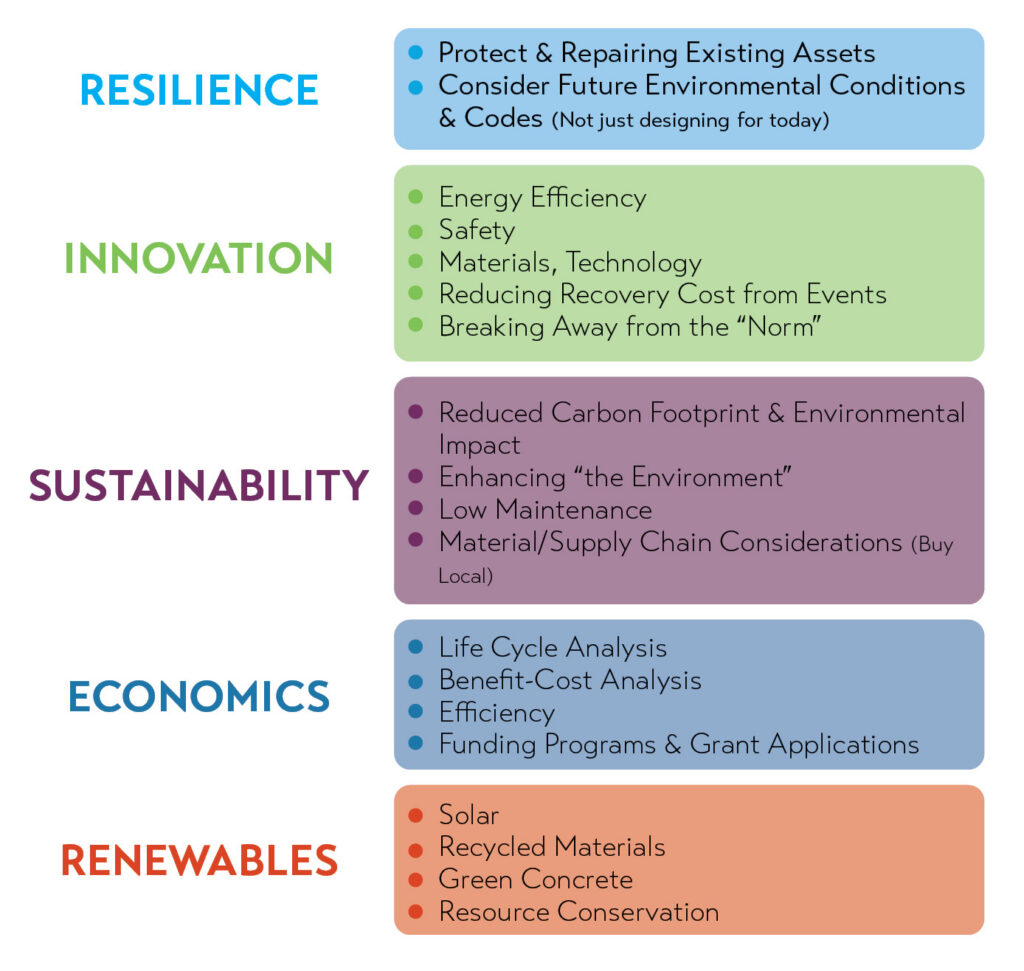
This Earth Day, we’re taking a moment to reflect on the Resilient, Innovative, Sustainable, Economical, and Renewable (RISER) solutions we’ve engineered alongside our clients. 
RISER is more than a passionate group – it’s a mindset. Standing for Resiliency, Innovation, Sustainability, Economics, and Renewables, it serves as a lens through which we evaluate our work and our impact. While our direct contributions to climate change may be relatively small, the infrastructure and development projects we help design carry a much larger footprint. That responsibility drives us to reduce impacts wherever practicable and deliver smarter, more adaptive solutions.
Aviation: Data-Driven Environmental Resilience
Across disciplines, RISER principles show up in different ways, but always with the same goal to create practical, forward-thinking outcomes for our clients.
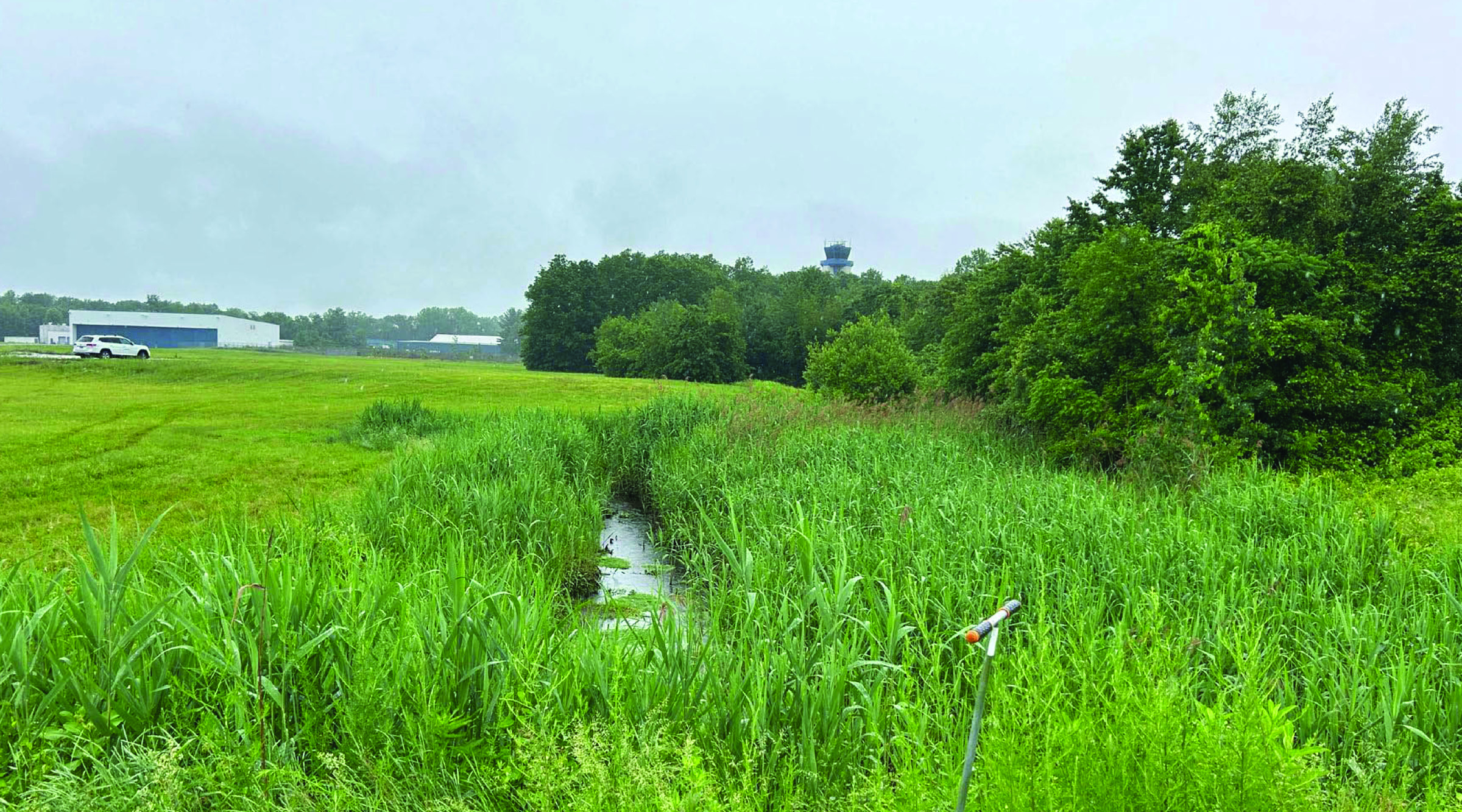
In aviation, that means tackling complex environmental challenges head-on. At Tweed-New Haven Airport, our team is advancing one of the most significant environmental permitting efforts in Connecticut in decades. Through coastal wetland restoration, tide gate design to support appropriate salinity levels, and native species planting plans, the project is restoring ecological balance while supporting airport operations. To address increasing weather variability, the design will include a custom tool that pulls live data from NOAA’s Weather Prediction Center, enabling proactive infrastructure adjustments based on forecasted conditions. This forward-looking, data-driven approach to resilience is intended to fill a critical gap and provide a reliable solution clients can depend on.
Site Development: Repurposing with Purpose
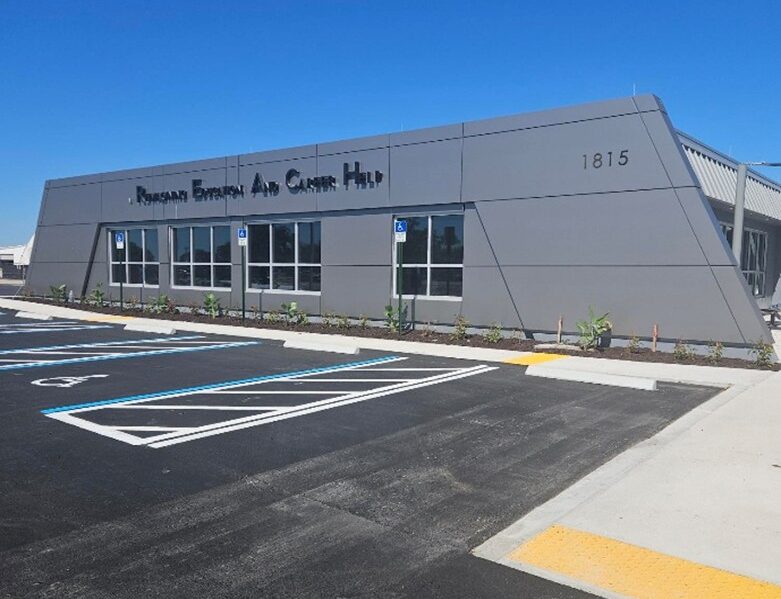
In the civil site development space, RISER often means finding added value in what already exists both environmentally and economically. The Martin County REACH Center is a strong example of how sustainability and community impact can align. An underutilized World War II bunker has been transformed into a modern education and career training facility, supported by ARPA funding, creating new opportunities to build and strengthen the local workforce. By preserving the existing structural shell, the project reduced material waste and avoided the higher costs of demolition and new construction, while delivering long-term community and economic benefits. It’s a reminder that the most effective solutions don’t just save resources, they also create lasting value.
Transportation: Designing for More Than Just Vehicles
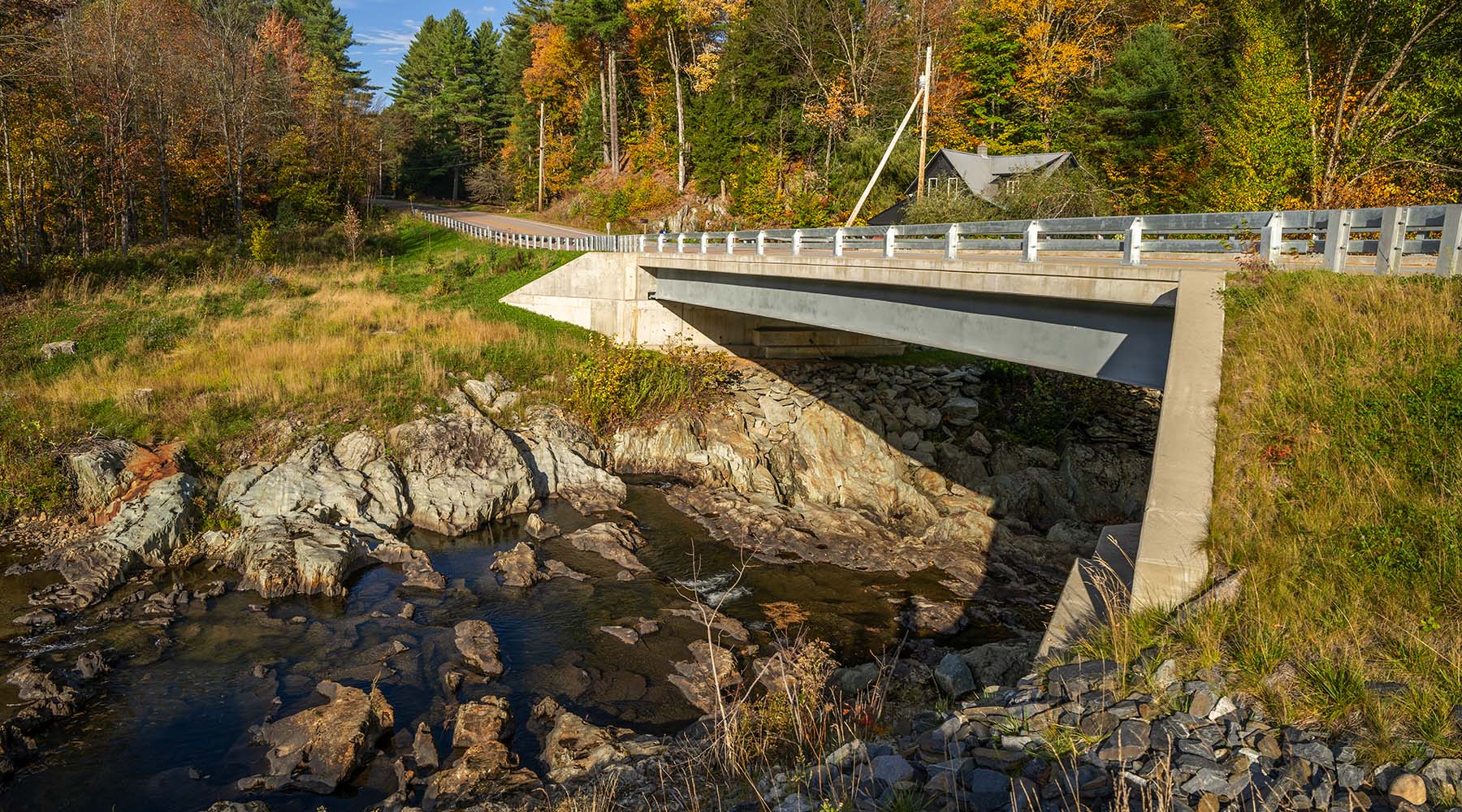
In ground transportation, RISER comes to life through projects that balance engineering performance with environmental and community considerations. In northern Maine, we partnered with WSP and MaineDOT on a bundle of 11 bridge and culvert replacements, all designed with resilience in mind. Detailed hydraulic and scour analyses ensure long-term stability, while habitat connectivity features (such as wildlife shelves and appropriately sized spans) support safe passage for both aquatic and terrestrial species. These designs recognize that infrastructure doesn’t exist in isolation; it interacts with entire ecosystems.
RISER principles also guided a rethinking of the Walnut Oval in Nashua, New Hampshire – a long-standing barrier to downtown connectivity. By simplifying the layout to a single travel lane and reconfiguringsurrounding streets, the design improves safety and usability for drivers, pedestrians, and cyclists alike. The project also demonstrates how thoughtful phasing can help communities maximize available funding while still achieving long-term goals. Sometimes the most effective solutions come from challenging conventional approaches, and proving that something different can work better.
Municipal & Land Development: Community-Scale Impact
At the municipal and land development level, RISER often means helping communities unlock value in unexpected ways. In Belmont, New Hampshire, a decommissioned gravel pit is being converted into a solar installation that generates approximately 1 MW of power, complete with battery storage to support grid reliability. Projects like this not only provide clean, local energy, but also strengthen community resilience by reducing dependence on distant power sources.
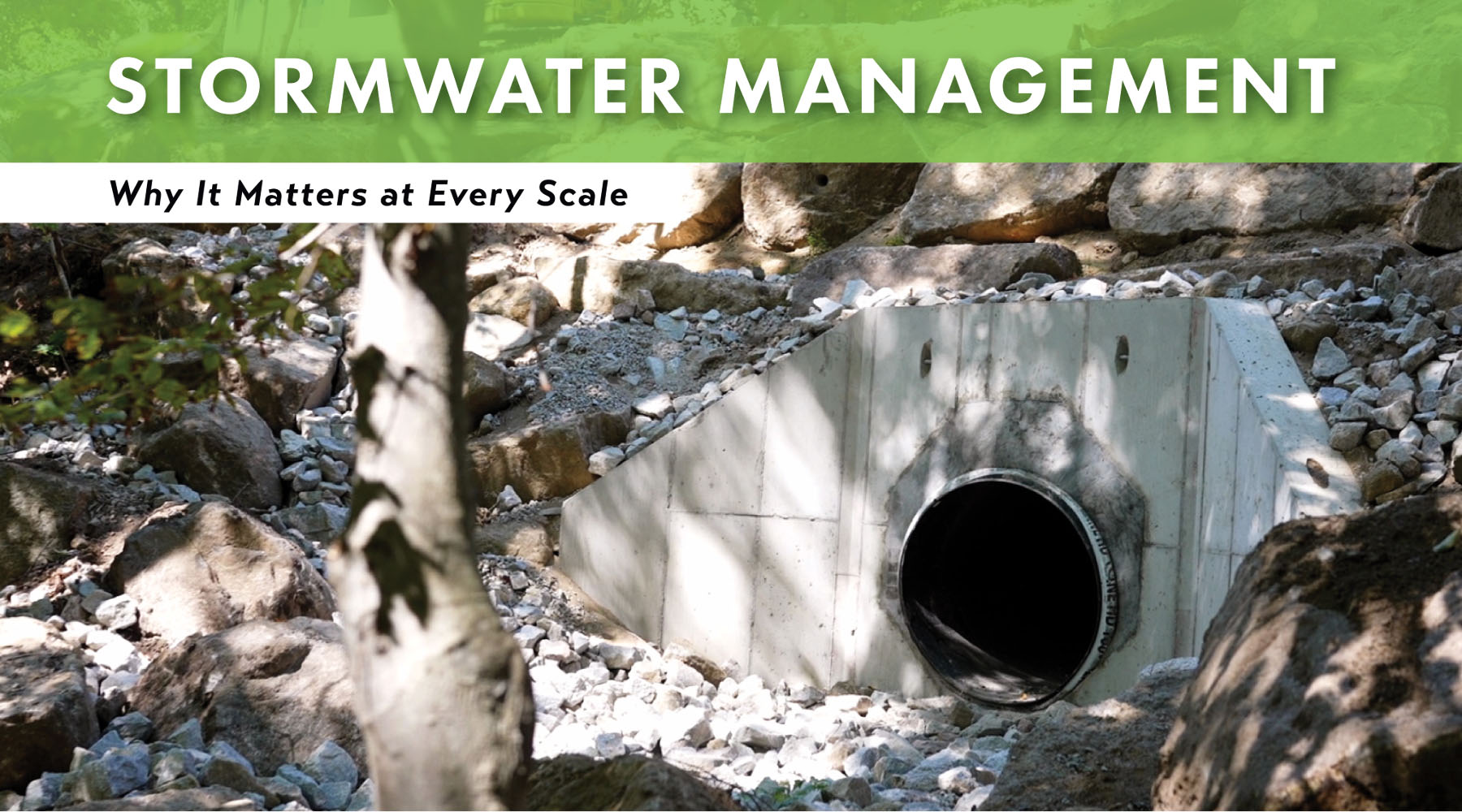
In Newfields, New Hampshire, our work focused on helping a small community navigate stormwater challenges with limited resources. By identifying key runoff “hot spots,” developing targeted best management practices, and even tracing a previously unknown outfall, we helped position the Town to secure funding through the Clean Water State Revolving Fund and will obtain PTAP credits when the project moves to the building phase. It’s a reminder that even smaller-scale efforts can have meaningful environmental impacts when approached thoughtfully.
Looking Ahead This Earth Day
Across all of this work, one thing remains consistent: we are committed to finding the best solution for each client. A solution that balances resilience, sustainability, and cost while supporting the broader community. That might mean restoring wetlands, repurposing existing structures, designing for wildlife movement, or helping secure critical funding. Often, it means doing all of the above.
This Earth Day, we encourage you to think about how your own community interacts with the environment. Where are the vulnerabilities? What opportunities exist to improve both the natural and built environment? More often than not, those opportunities overlap, and that’s where meaningful change begins.
If you’re not sure where to start, we are here to help!