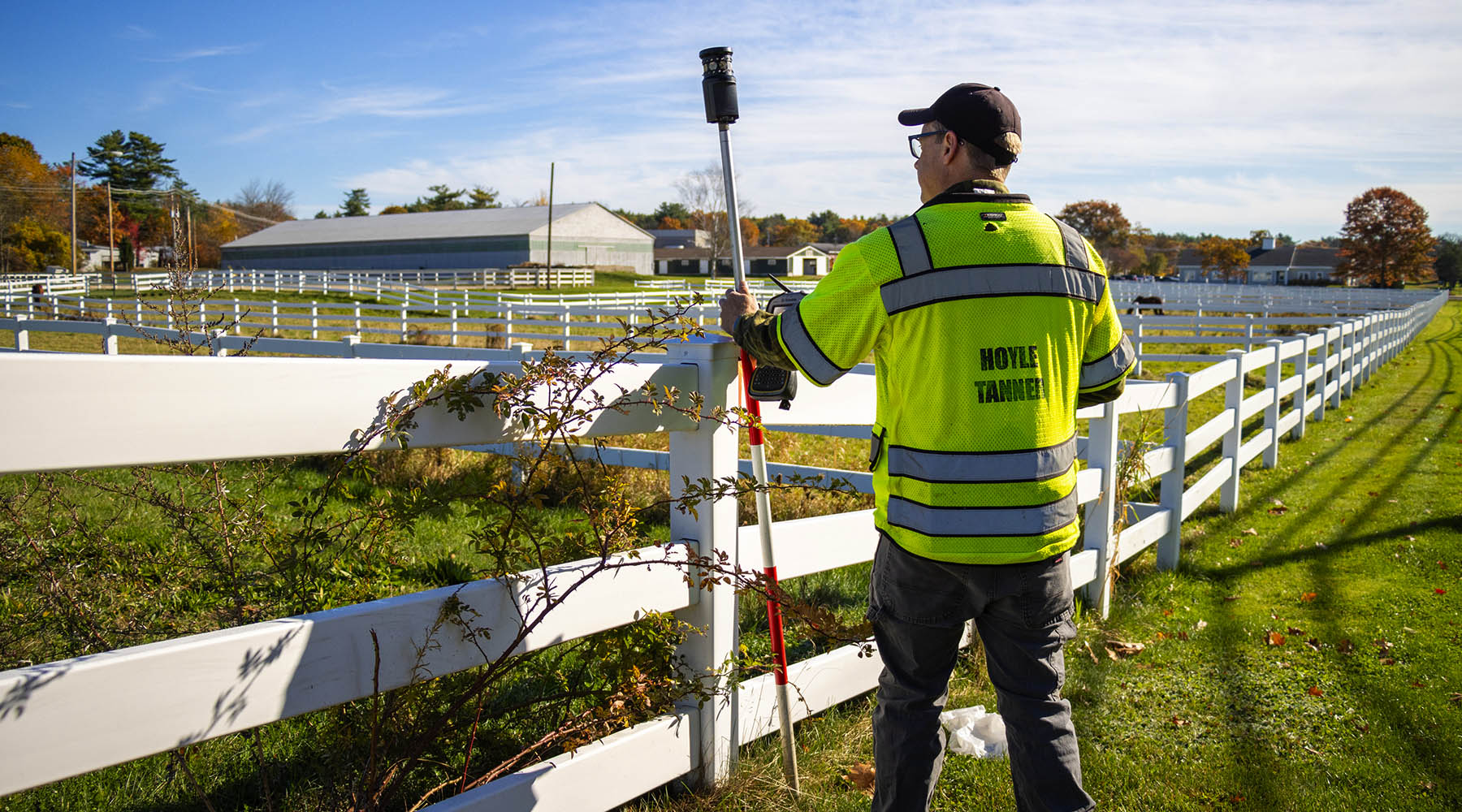
LifeFlight of Maine considers Jackman to be a critical piece of medical transportation infrastructure; Newton Field Airport plays a vital role in the Jackman-Moose River region emergency response plan providing a critical link to the national incident management system in this remote area. This project has enabled the airport to be a safe, efficient transportation link to the northwest region of Maine for the next 20 years by expanding Runway 13-31 from its current dimensions of 60′ wide, 2,900′ long, to 75′ by 3,600′ long. The rehabilitation of the existing surface and the addition of an aircraft turn-around area on the 31 end, along with MIRLS, and PAPI visual aids also contribute to the airport safety and efficiency. Data collection and analysis of drone-captured imagery by Hoyle Tanner’s in-house sUAS team identified trees to be selectively cut to create unobstructed navigable airspace for arriving and departing aircraft in the proposed new runway configuration. Trees having the potential to penetrate the FAA surface were cut in accordance with the NEPA Environmental Assessment requirements. Some of the identified trees were located on a privately-owned parcel of land abutting the east end of the Airport; an easement was purchased to allow for tree removal from these areas.
SERVICES
sUAS Data Collection
Final Design
Permitting
Construction Administration
Construction Observation
From the blog
Learn about ongoing projects and the innovative processes we employ for our clients.
For communities along Lake Champlain, phosphorus reduction is not abstract policy — it is an ongoing operational responsibility. MS4 permit requirements, public expectations, and watershed protection goals all converge...
In northern climates, winter is more than a season – it's a construction variable. For airport projects in particular, cold-weather conditions can shape schedules, budgets, and even the quality...
Key Takeaways from The Wildlife Society’s Recent Webinar The Wildlife Society recently hosted a national webinar (led by Dr. Patricia Cramer) focused on the growing importance of wildlife connectivity...
Insights from the People Who Support Your Ground Transportation Infrastructure Every Day As we head deeper into 2026, we asked our ground transportation team one simple question: “What do...
Hoyle Tanner is currently providing wastewater engineering design services for the Town of Richmond, Vermont, to assess and develop alternatives which address the urgent need to upgrade the existing...
Hoyle Tanner’s Chelmsford office expansion is officially complete! After months of planning and coordination, construction was completed earlier this year to expand the office footprint, including the removal of...
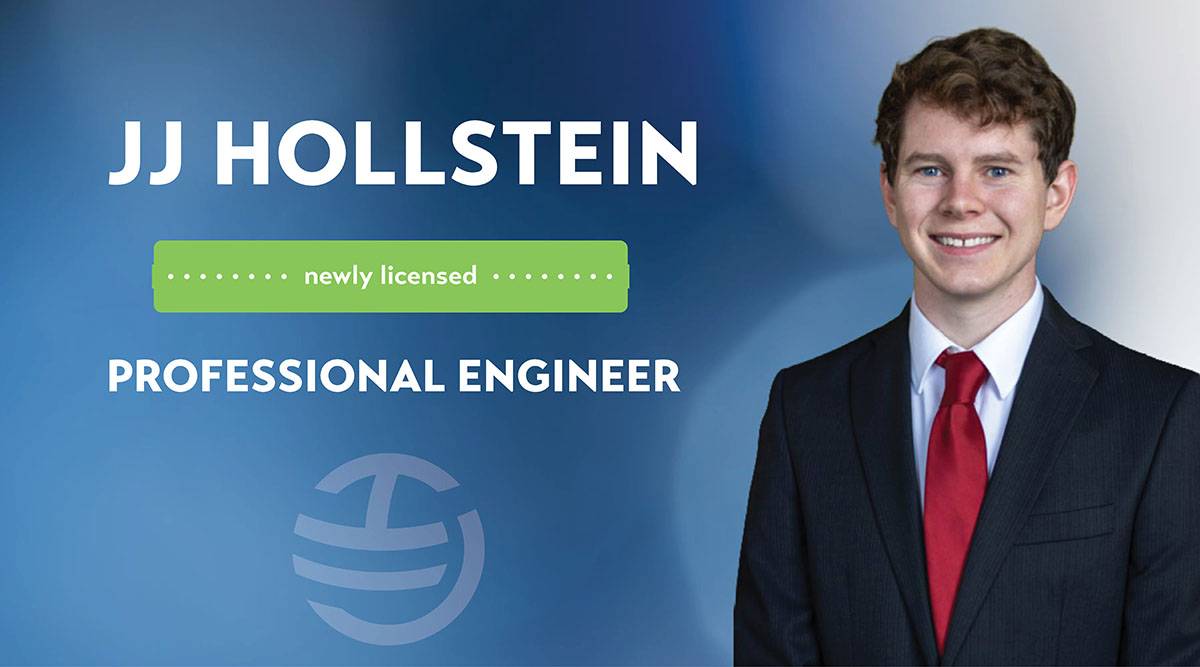
We’re proud to announce that Jeffrey “JJ” Hollstein has earned his Professional Engineering (PE) license! JJ is a structural engineer in our Ground Transportation Division (Chelmsford office), where he...
As we close the chapter on 2025, we’re proud to reflect on a year defined by meaningful progress for our teams, our clients, and the communities we serve. Across...