For communities along Lake Champlain, phosphorus reduction is not abstract policy — it is an ongoing operational responsibility. MS4 permit requirements, public expectations, and watershed protection goals all converge in how stormwater is managed on the ground.
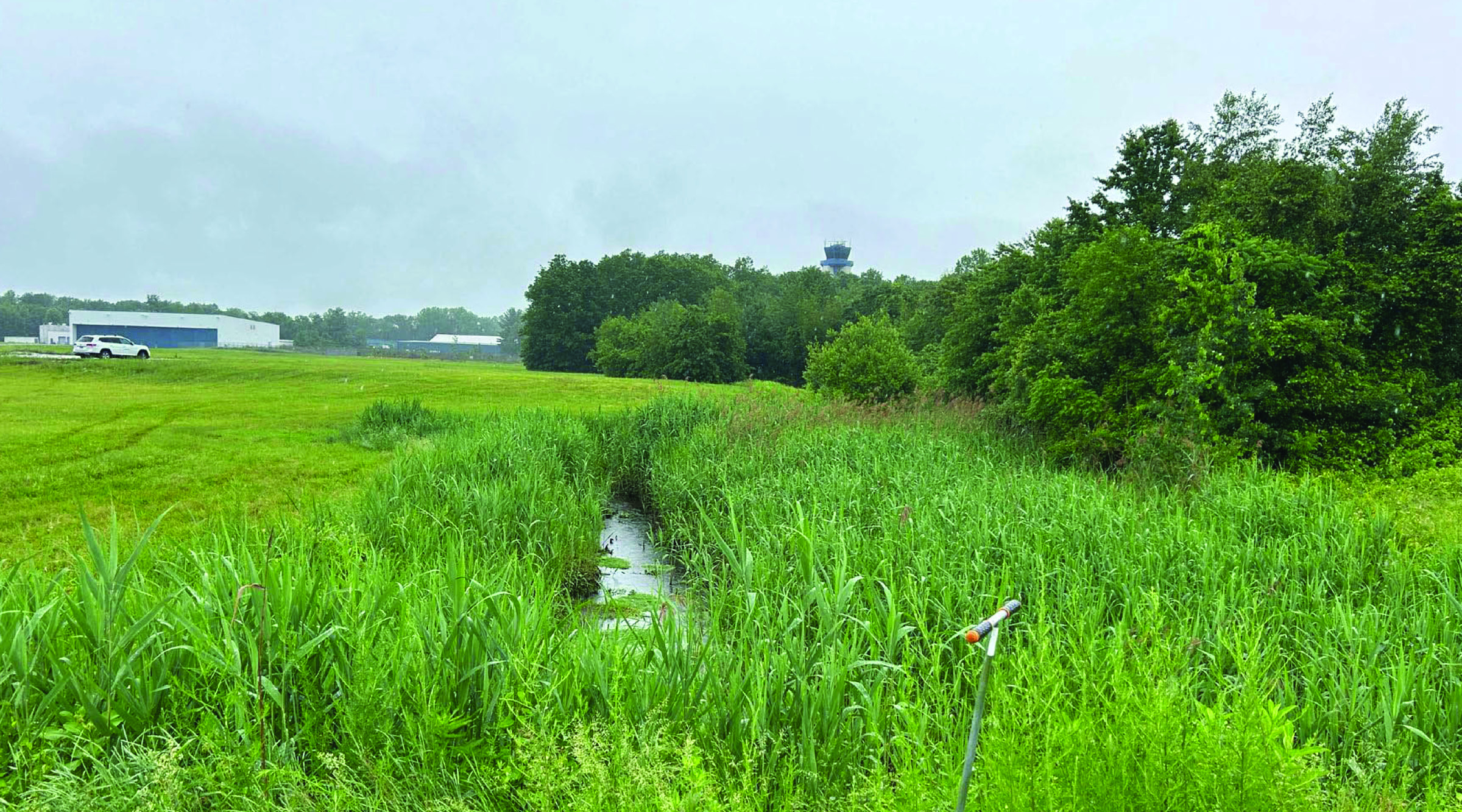
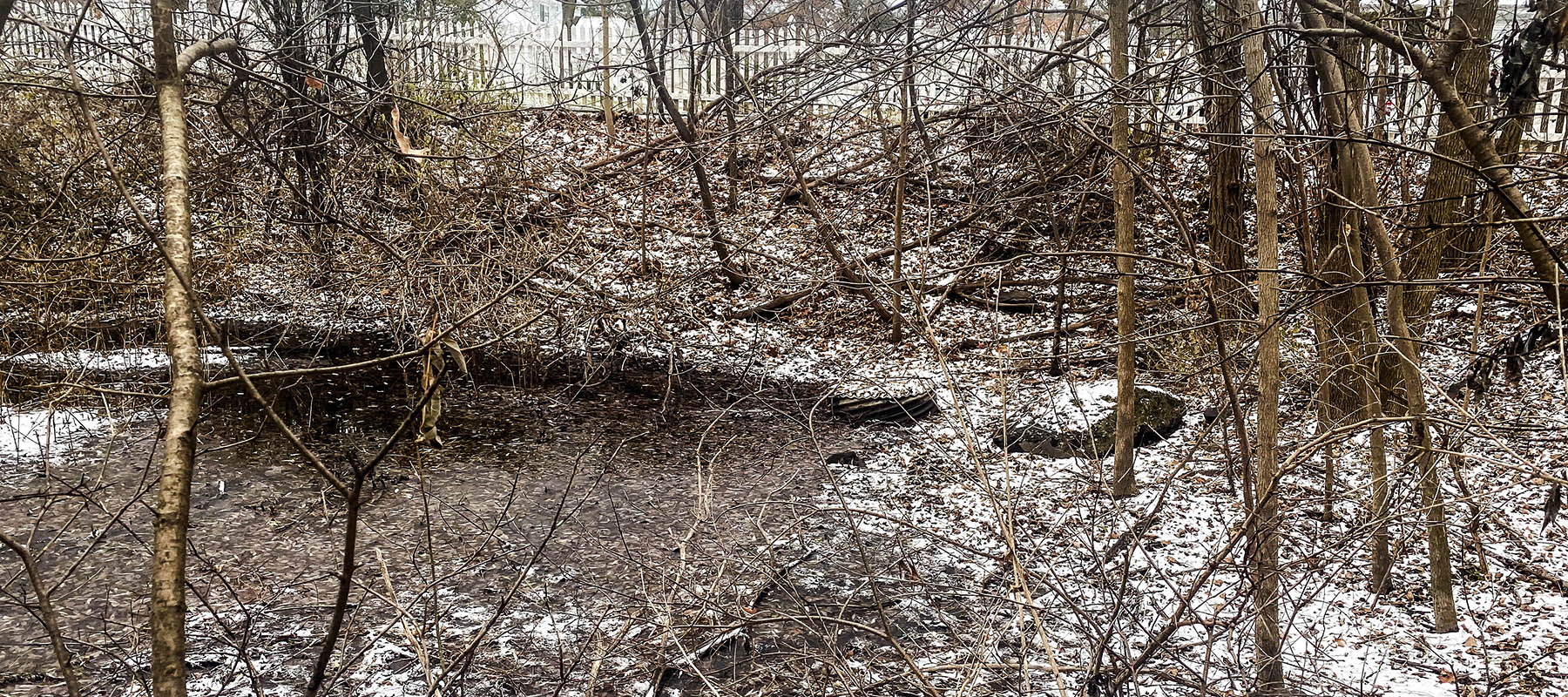
In Burlington’s South End, one of those responsibilities is playing out along Oak Beach Drive. The City is advancing a retrofit of an existing stormwater basin within a drainageway that ultimately flows beneath Flynn Avenue and discharges to the lake. The objective is straightforward: improve water quality treatment and reduce phosphorus loading in a way that aligns with the City’s MS4 permit and Phosphorus Control Plan.

Addressing Phosphorus at an Existing Basin
The project focuses on upgrading an existing stormwater basin that no longer provides the level of treatment required under current standards. Like many systems constructed under earlier design criteria, the basin manages runoff but does not fully address today’s phosphorus reduction expectations.
The drainageway serving this area collects stormwater from surrounding developed properties and roadways before conveying it toward Lake Champlain. Without enhanced treatment, phosphorus bound to stormwater runoff can continue downstream.

Rather than constructing a new facility elsewhere, the City chose to reinvest in and retrofit existing infrastructure. This approach makes use of available space within an established drainage corridor while improving performance to meet current regulatory standards.
Working Within an Established Urban Drainageway

Retrofitting stormwater infrastructure in a developed corridor requires careful coordination. The Oak Beach Drive basin is located within a constrained urban drainageway, with existing utilities, roadway crossings, and environmental considerations influencing design decisions.
Our role includes hydraulic analysis to understand how stormwater moves through the system during various storm events. In practical terms, this modeling helps ensure that the upgraded basin:
- Manages runoff volumes appropriately
- Avoids creating upstream or downstream flooding concerns
- Functions reliably under the design storm conditions required by the Vermont Stormwater Management Manual
In addition to hydraulic modeling, the project includes environmental resource documentation and permitting to ensure compliance with state requirements. Utility coordination is also a key component, given the proximity of existing infrastructure within the corridor.
By addressing these constraints early in design, the City reduces the likelihood of construction-phase surprises and unanticipated costs.
Incorporating a Tier II Gravel Wetland
At the core of the retrofit is the addition of a Tier II gravel wetland system.
A gravel wetland is a stormwater treatment practice designed to filter runoff through a planted gravel bed. As stormwater moves slowly through the system, sediment settles out and pollutants — including phosphorus — are captured and treated through physical, chemical, and biological processes.
A Tier II designation under Vermont standards indicates a higher level of treatment performance. For municipalities, this translates to measurable phosphorus reduction credit toward MS4 and Total Maximum Daily Load (TMDL) obligations.
Incorporating a gravel wetland into an existing basin allows the City to:
- Increase phosphorus removal efficiency
- Align with current design guidance of the Vermont Stormwater Management Manual
- Support implementation of its Phosphorus Control Plan
The retrofit also includes associated drainage infrastructure improvements to ensure flows are properly conveyed into and through the treatment system.
Funding Through Vermont’s Clean Water Initiative
Like many Vermont communities, Burlington is balancing regulatory compliance with fiscal responsibility. This project is funded through the Vermont Clean Water Initiative Program (CWIP) MS4 Community Formula Grant.
Securing and applying this funding helps offset the capital cost of the retrofit while advancing required phosphorus reduction projects. Aligning design with grant requirements from the outset ensures that the project scope, documentation, and performance targets meet state expectations.
For municipal leaders, this coordination between funding strategy and technical design is essential. It supports compliance goals without placing unnecessary strain on local budgets.
Designing for Constructability & Long-Term Performance
Stormwater retrofits are most successful when they are both technically sound and practical to build. In a constrained urban drainage corridor, constructability becomes a central design consideration.
Preliminary and final design efforts have focused on:
- Phasing work to minimize disruption
- Integrating the system into the existing drainageway footprint
- Ensuring long-term maintainability
By designing within the existing corridor, the City avoids expanding its infrastructure footprint while still improving water quality treatment. The goal is not simply to meet current permit thresholds, but to provide a durable system that performs reliably over time.
A Steady Approach to Watershed Responsibility
Phosphorus reduction along Lake Champlain is a long-term effort. Projects like the Oak Beach Drive retrofit represent incremental but meaningful progress toward cleaner water and regulatory compliance.
Through hydraulic analysis, environmental documentation, permitting, and coordinated design, this project supports Burlington’s MS4 obligations while strengthening the performance of existing infrastructure. It reflects a practical approach: improve what you have, align with available funding, and design for long-term resilience.
If your community is evaluating stormwater retrofits under MS4 requirements, we’re happy to talk through funding pathways, design options, and what implementation could look like in your local context. Reach out to me.